

The face is often the first area to reflect aging. Over time, sun exposure, gravity, stress, and genetics can lead to deeper folds around the mouth, sagging along the jawline, loose skin in the neck, and fullness beneath the chin. These changes can make you look older or more tired than you feel, even when the rest of your body still feels youthful.
At Elite Plastic Surgery in Grand Rapids, Michigan, facelift procedures are performed by board-certified plastic surgeons with over 40 years of combined experience. Our surgeons use advanced surgical techniques and an analytical approach to create balanced results. Each treatment plan is customized based on your anatomy, goals, and long-term expectations.
What Is A Facelift?

A facelift, medically known as a rhytidectomy, is a surgical procedure designed to improve visible signs of aging in the lower face and neck. Rather than simply tightening skin, the surgery focuses on lifting and repositioning the deeper facial tissues while removing excess skin for smoother, firmer contours.
By restoring support beneath the surface, a facelift can soften deep creases, refine the jawline, reduce jowls, and improve laxity in the neck.
For patients seeking more comprehensive rejuvenation, a facelift can be combined with procedures such as eyelid surgery or a brow lift to create balanced improvement across the entire face.
Types Of Facelifts
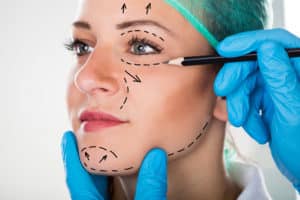 This is a common question with a somewhat complicated answer, as facelifts come with so many variations, techniques, and titles. As a general rule, surgical facelifts differ by the type of incision, the number of tissue layers treated, the areas of the face targeted, and the degree of invasiveness.
There are many different names and approaches for facial procedures collectively called facelifts, but they all basically fall into one of two main categories:
- The Mini Facelift (MACS, Short Scar, S-Shape, Mid-face)
- The Full Facelift (SMAS, Deep Plane, Open, Traditional)
Mini Facelift
Facial tissue is lifted and re-suspended using minimal incisions that can be hidden by the ear and hairline. The mini-lift is designed to improve the appearance of smile lines, jowls, and loose skin, but provides less dramatic results than a full facelift. The procedure can be performed fairly quickly under local anesthesia in an office setting.
Full Facelift
A full facelift lifts and repositions the deeper facial tissues to restore support and definition. Excess skin is removed, and fat may be adjusted to improve contour.
Incisions typically begin in the hairline at the temple, extend around the ear, and continue behind it, allowing scars to remain well concealed. While recovery takes longer than a mini facelift, this approach provides more comprehensive and longer-lasting improvement in the lower face and neck.
The right choice can be based on your surgeon’s recommendations, considering specifics such as your facial anatomy and aesthetic goals, downtime and recovery preferences, and the risks involved.
What Are The Benefits Of A Facelift Procedure?
The facelift is beneficial for patients who are interested in correcting mild to severe signs of aging. This procedure can:
- Restore more definition along the chin and jawline by eliminating jowls and excess fat.
- Eradicate excess fat and sagging skin beneath the chin and in the upper neck region
- Restore contours across the midface
- Increase confidence and satisfaction with appearance
- Achieve the longest-lasting results of current facial rejuvenation procedures
- Require only about two weeks of downtime
Before And After Facelift Photos:
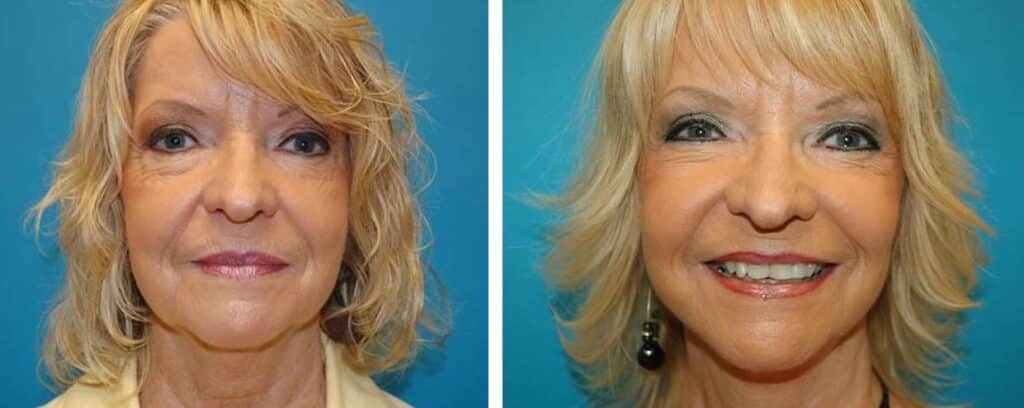
*Individual results may vary
View more before & after photos
Who Are The Ideal Candidates For Facelift Surgery?
In order to achieve successful outcomes, it’s important that facelift candidates are in good overall health and have realistic expectations about results.
Other factors that can affect patient suitability include:
- Skin elasticity: Successful healing with optimal results depends on having skin that is able to conform to its new, improved contours. It’s best if the skin still retains some of its natural suppleness and elasticity.
- Well-defined bone structure: Patients with less distinct features and underlying bone structure may benefit from facial implants instead of, or in addition to, a facelift.
- Commitment to recovery time and care instructions: Optimal outcomes are possible when facelift patients follow all post-procedure instructions and are prepared for the time it takes to realize the final results.
About Your Facelift Procedure:
Traditional facelift surgery is performed in a hospital or outpatient surgical center. Depending on the specific type of procedure, your surgeon will use either general or regional anesthesia (nerve block), and one of these two surgical approaches:
- The minimally invasive approach involves smaller incisions and can provide a more subtle change in appearance. The procedure generally allows for faster recovery time and less pain than open surgery, as it causes reduced trauma to the tissue.
- Open surgery involves making a larger incision from the temple, around the ear to the lower scalp. Though open surgery can require a longer and more uncomfortable recovery, it can also be the most effective option for some patients.
Your surgeon will advise you as to which procedure is best for you, as well as the length of hospital stay, based on various factors such as age, medical history, general health, and even personal preference.
What Is A Good Age For A Facelift?
Facelift surgery can be an appropriate procedure for adults in their 40s, 50s, 60s, and older. It isn’t your specific age that a surgeon analyzes, but rather your individual circumstances. Facial aging may progress more quickly in some people, making them an ideal candidate for a facelift earlier on.
In addition to consulting with patients about their concerns and desired outcome, our board-certified plastic surgeons conduct a full medical history and evaluation to confirm good health and the optimal potential for a smooth recovery.
How Long Does A Facelift Procedure Take?
The facelift procedure can take from two to four hours. The length of the procedure is determined by the type of facelift selected and the inclusion of additional procedures, such as blepharoplasty.
How Long Is Recovery After Facelift Surgery?

Recovery time after a facelift depends on the type of procedure performed, the surgical technique used, and how your body heals. Many patients begin feeling noticeably better within four to five days.
Most people feel comfortable returning to public activities within one to two weeks, once bruising and swelling have improved. While you’ll see early changes sooner, final results continue to refine over three to six months as residual swelling fully resolves.
In addition:
- A bandage might be placed around the face to minimize swelling and bruising, and can be removed according to your surgeon’s instructions.
- Tubes may be present when you go home to drain excess blood and fluid and should stay in place until removed at your follow-up visit.
Specific recovery instructions will include how to care for the surgical site and drains, medications to apply or take orally, problems to watch for, and when to have follow-up appointments.
Why Choose Elite Plastic Surgery?
All surgical procedures are performed by board-certified plastic surgeons Shannon Armstrong, M.D., William T. Cullen, M.D., F.A.C.S., Matthew Martin, M.D., and Matthew P. Fahrenkopf, M.D. Each is certified by the American Board of Plastic Surgery and brings advanced training in cosmetic and reconstructive techniques. Our surgeons have completed respected residency and fellowship programs. They serve as clinical faculty through Michigan State University and remain active in research, education, and surgical leadership roles within the region.
Just as important as credentials is the approach we take with every patient. We focus on thoughtful planning and communication so you understand your options and expected outcomes. Our team works to deliver facelift outcomes that are aligned with your goals.
Frequently Asked Questions

How Long Will My Facelift Results Last?
Generally, the more extensive the facelift is, the longer the improvements will last. For example, a full facelift may last up to 15 years. More subtle procedures like the mini facelift may last from two to six years. The type of facelift is only one factor that can influence how long results last.
Additional factors include:
- Patient age at the time of surgery: Studies suggest that younger patients in their 40s or 50s tend to enjoy longer-lasting results.
- Additional procedures: Patients may choose to combine their facelift with other procedures, such as a brow lift or blepharoplasty, to maximize rejuvenation and extend their results.
- Lifestyle: People who are generally healthy, eat well, take good care of their skin, and prioritize sun protection typically enjoy lasting results from facelift surgery.
Tips for maximizing your facelift include:
- Select an experienced, board-certified surgeon who performs several facelifts a year.
- Follow your post-operative instructions.
- Wear sunscreen every day. Wear a hat on especially sunny days.
- Avoid alcohol and tobacco. These dehydrate and degrade the skin more quickly.
- Stay hydrated by drinking at least 64 ounces of water daily and using a high-quality moisturizer.
- Maintain a healthy weight.
- Support aging skin with non-surgical treatments like facials, chemical peels, injectables, and other procedures.
How Soon After Facelift Surgery Can I Resume Normal Activities?
The timeline for returning to “normal” activities varies based on the procedure and the individual, but in general, patients should be up and moving after the effects of the anesthesia have worn off and vital signs are stable.
Here is what you could potentially expect:
- After ten days to two weeks: Return to office work
- After one week: Leisurely walking
- About ten days to two weeks: Brisk walking
- After two weeks: Light jogging or another aerobic exercise
- In three weeks: Slowly reintroduce weight lifting
- In six weeks: More vigorous activities
Are There Risks to a Facelift Procedure?
Facelifts are considered one of the safest cosmetic procedures, but all surgery comes with some common risks, including anesthesia side effects, bleeding, and infection.
Facelift surgery brings some specific risks and complications that can be temporary or permanent, including:
- Nerve injury to the facial muscles
- Healing problems, which are more common for smokers
- Obvious scarring
- Numbness or tingling around incisions
- Hair loss at incision sites
- Skin discoloration
- Blood or fluid retention
Are Facelifts Covered by Insurance?
Insurance companies typically do not cover the costs associated with facelift procedures. This surgery is done for cosmetic reasons, so it is not deemed medically necessary.
How Much Does a Facelift Cost?
Several factors influence the cost of facelift surgery, including the type of facelift a patient has done. Additional factors include surgical center fees, anesthesia, medical supplies, and ancillary procedures a patient chooses to incorporate into their treatment plan. Our team sits with you after your consultation to outline the details of your proposed treatment, including the costs of individual services.
Schedule A consultation
Your surgeon should discuss all possible complications and risks of facelift surgery during your initial consultation appointment with our Elite Plastic Surgeons. At that time, the doctor will be able to advise you as to whether a facelift is the right procedure for you, or if an alternate treatment or surgery might be preferable.
Elite Plastic Surgery proudly serves Grand Rapids, MI, and the surrounding areas. Contact us at (616) 459-1907 to schedule an appointment today!